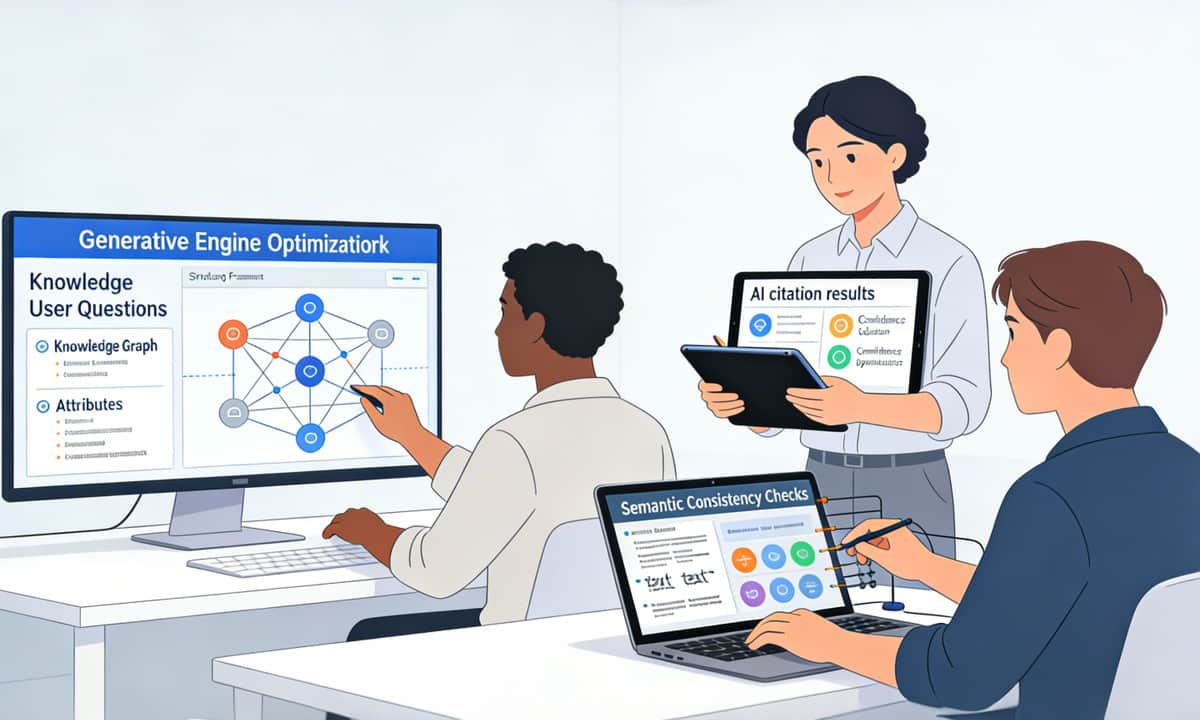
When users ask questions in generative AI systems, the answers they receive are no longer simple compilations of retrieved information. Instead, they are synthesized conclusions built from multiple sources, professional knowledge, and contextual understanding. This shift has pushed Generative Engine Optimization (GEO) from a forward-looking concept into a core capability that businesses must master in the AI era. GEO is not about whether content can be found, but whether it is trusted, cited, and integrated into the AI’s final answer.
Under this new information distribution model, brand competition is moving from traffic entry points to cognitive entry points. The content that AI can understand, verify, and trust is far more likely to influence user decision-making.
What Is GEO? A Clear Definition of Generative Engine Optimization
Generative Engine Optimization (GEO) refers to a content and knowledge optimization framework designed specifically for generative AI engines. Its goal is to increase the likelihood that brand information is cited, given authority, and presented comprehensively within AI-generated answers.
Unlike traditional SEO, which relies on keyword matching and ranking algorithms, GEO emphasizes semantic understanding, knowledge structure, and credibility evaluation. Generative AI does not simply “retrieve webpages.” Instead, large language models break down questions and generate answers based on content they can interpret and verify. At its core, GEO is about aligning content with how AI systems process and understand knowledge.

The Core Logic of GEO: From “Being Found” to “Being Cited”
When generative AI answers questions, it typically relies on semantic networks composed of entities, relationships, and attributes. GEO requires content to present clear knowledge structures rather than marketing-oriented descriptions. By explicitly defining concepts, parameters, causal relationships, and applicable scenarios, content becomes easier for AI to recognize as a reliable source.
At the same time, AI evaluates content based on data support, logical completeness, and source authority. Content backed by quantitative indicators, standards, or industry endorsements is more likely to be prioritized during answer generation.
As multimodal capabilities advance, AI increasingly synthesizes information from text, images, audio, and video. This means GEO is no longer limited to text optimization but requires consistent knowledge expression across multiple content formats.
How to Do GEO Well: A Practical Framework from Content to Technology
Effective GEO implementation spans content creation, technical adaptation, and performance monitoring. At the content level, real user questions should serve as the starting point. Information should be structured clearly, answering core questions directly before expanding into context and supporting details. This logical, hierarchical approach aligns well with AI parsing behavior.
From a technical perspective, organizations should organize fragmented information into AI-readable knowledge systems. This may involve using knowledge graphs to define product attributes, use cases, and differentiators, while ensuring semantic consistency across content formats. Organizations with sufficient resources may also deploy lightweight domain-specific models in edge or private environments to improve AI prioritization in specialized scenarios.
In terms of measurement, GEO focuses less on clicks or rankings and more on how content appears within AI answers, including citation position, completeness, and clarity of attribution. Continuous monitoring of these indicators helps identify gaps or ambiguous expressions and supports ongoing optimization.
The Value of GEO Across Different Industries
Different industries emphasize different aspects of GEO. Manufacturing prioritizes structured knowledge and clearly defined processes. Healthcare focuses on authoritative sources and regulatory compliance. Consumer and retail sectors aim to integrate product attributes naturally into usage scenarios and decision guidance. Regardless of industry, the core objective remains the same: ensuring that AI treats brand content as credible, useful, and essential knowledge when answering relevant questions.
Challenges and Future Trends of GEO
GEO still faces challenges, including limited algorithm transparency, rapid technological iteration, and increasingly strict data compliance requirements. Addressing these issues requires agile coordination between content and technology teams and a long-term perspective on GEO as a capability, not a one-time optimization task.
Looking ahead, GEO will expand beyond semantic optimization into emotional understanding, intent recognition, and personalized expression. As AI citation traceability and ethical standards mature, credibility and traceability of content will become new competitive thresholds.
Frequently Asked Questions (FAQ)
What is the core difference between GEO and SEO?
SEO focuses on ranking within search engine results pages, while GEO focuses on whether content is trusted and incorporated into generative AI answers. The former is traffic-driven; the latter is cognition-driven.
Which businesses should prioritize GEO first?
Industries with specialized knowledge, complex products, or high trust requirements—such as healthcare, education, manufacturing, automotive, and SaaS—are especially well suited to early GEO adoption.
Will GEO replace SEO?
GEO will not fully replace SEO but will complement and extend it. For the foreseeable future, both will coexist, serving different information access scenarios.
How long does it take for GEO efforts to show results?
GEO is a long-term investment. It typically requires several months of sustained content and knowledge optimization before stable citation effects appear in AI-generated answers.
Can small and medium-sized businesses implement GEO?
Yes. Smaller organizations can start with core products or key questions, structure foundational knowledge first, and expand gradually without attempting full coverage from the outset.
Conclusion
As generative AI continues to reshape how information is distributed, GEO is no longer optional. It has become a foundational strategy for building long-term brand cognition. When a company’s content becomes an indispensable part of AI-generated answers, the resulting trust and influence far exceed traditional traffic-based advantages.